
Accelerating Diagnostics in a Time of Crisis
Accelerating Diagnostics in a Time of Crisis: The Response to COVID-19 and a Roadmap for Future Pandemics chronicles our nation’s effort to combat the SARS CoV-2 virus and bring millions of Covid-19 diagnostic tests to market in a period of less than a year.

Table of Contents
Chapter 1
Early Detection, Response, and Surveillance, of the COVID-19 Pandemic Crisis
Chapter 2
Immune System Responses to SARS-CoV-2
Chapter 3
Clinical Management: A Roadmap Based on One New York City Hospital’s Response to the COVID-19 Pandemic
Chapter 4
Contribution of RADx Tech to the Rapid Development of COVID-19 Diagnostic Tests
Chapter 5
Coordination of Resources for the Manufacturing and Deployment of COVID-19 Diagnostic Assays
Chapter 6
Quality and Risk Management Processes for Diagnostic Assays During an Emergency Pandemic Response
Chapter 7
Development of Assays to Diagnose COVID-19
Chapter 8
Laboratory Verification and Clinical Validation of COVID-19 Diagnostic Assays
Chapter 9
Importance of Timely Sequencing, Tracking and Surveillance of Emergent Variants
Chapter 10
The RADx Regulatory Core and its Role in COVID-19 Emergency Use Authorizations
Chapter 11
Commercialization and Market Assessment of COVID-19 Assays
Chapter 12
Testing Strategies to Mitigate COVID-19 Disease Spread
Chapter 13
Chapter 13 — A Pandemic Not Just of Infection but of Inequality: The Social Impact of COVID-19
Chapter 14
Summary and Path Forward for Future Pandemics
Meet the Editors
Steven C. Schachter, M.D.
Professor of Neurology Harvard Medical School
Dr. Steven Schachter is Chief Academic Officer for CIMIT in Boston and a Professor of Neurology at Harvard Medical School. He is Past President of the American Epilepsy Society and has served on the Epilepsy Foundation of America Board of Directors and as Chair of its Professional Advisory Board. Dr. Schachter has published over 250 articles and chapters and edited or written 40 books. He is the founding editor and past editor-in-chief of the medical journals Epilepsy & Behavior and Epilepsy & Behavior Case Reports. He has extensive experience conducting, creating, and managing processes and teams that facilitate translational research and commercialization of medical technologies and the diagnosis and treatment of patients. His current focus is accelerating medical technologies from the bench to commercialization by engaging stakeholders, including government agencies and industry leaders. He led the extramural aspects of RADx Tech to support the development, commercialization, and production scale-up of accurate, rapid COVID-19 assays. His efforts have helped to establish a new model of translational research for medical technologies that is now widely applied across multiple funding agencies.
Wade E. Bolton, Ph.D.
Team Lead and Content Expert National Collegiate Inventors and Innovators Alliance
Dr. Bolton is Team Lead and Content Expert for Biocomx and works with the National Institutes of Health’s Rapid Acceleration of Diagnostics (RADx) initiative to speed innovation in the development, commercialization, and implementation of technologies for COVID-19 testing. Previously, Dr. Bolton served as Vice President of the Program Management Office for Personal Genome Diagnostics located in Baltimore, MD. Prior to this, he held roles as the Divisional Vice President for Hematology Research and Development at Abbott Laboratories in Santa Clara, CA; President of the Institute for Immunology Research; Founder, President & CEO of ImmunoSite Technologies, LLC (IST); and Vice President of Beckman Coulter.
Sample Lessons Learned
Immunology
Continue to explore immunological and molecular research to develop molecular strategies to better understand infection transmission to humans and technologies to develop innovative vaccine systems.
Clinical Management
Establish a permanent procedure to monitor the natural immunity status to the virus that represents a risk to become anepidemic or pandemic.
Resource Deployment
Forecasting can help prepare for unforeseen events. While it is impossible to anticipate every shortage or complication that may arise within the supply chain, proper forecasting, supplier relationships, and supplier contracts can mitigate unanticipated shortages.
Resource Deployment
Include design experts from the start. In hindsight, a product design expert would have a highly utilized team member in all projects. through manufacturing assessments and meetings withthe Clinical Review Committee, it became apparent that many assay workflows required design adjustments. Having a design expert on the Deployment Core would have been beneficial.
Clinical Management
Centralizing the distribution of supplies at the start of the pandemic allowed us to keep a closer eye on supply levels and determine contingency planning as we noticed items beginning to run low. Without a centralized plan for supplies, we may have run out of PPE like many other hospitals in the United States.
Surveillance & Initial Response
Set up Pandemic/Endemic Oversight Committees at the national and international level to manage information, announcements, and countermeasures for disease control.
Explore the graphics
View all of the book’s figures in greater details.
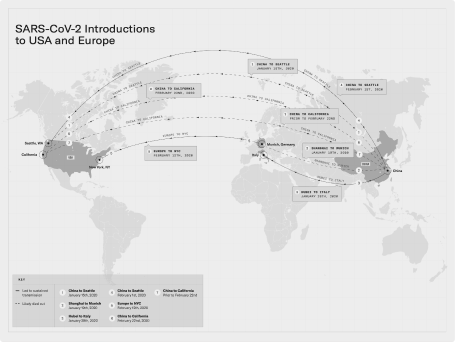
Chapter 1 / Fig. 1.4
SARS-CoV-2 introductions to U.S. and Europe. Credit: Modified from Worobey M, Science, 2020.
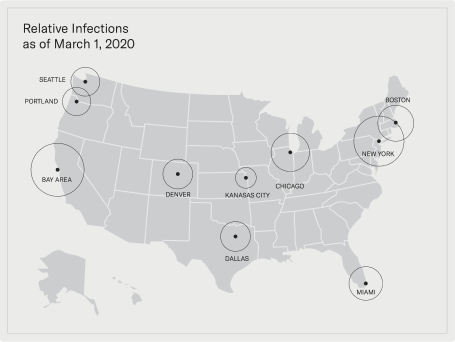
Chapter 1 / Fig. 1.5
Growth of cases in the United States in March 2020. Credit: Modified from New York Times, https://www.nytimes.com/interactive/2020/us/coronavirus-spread.html
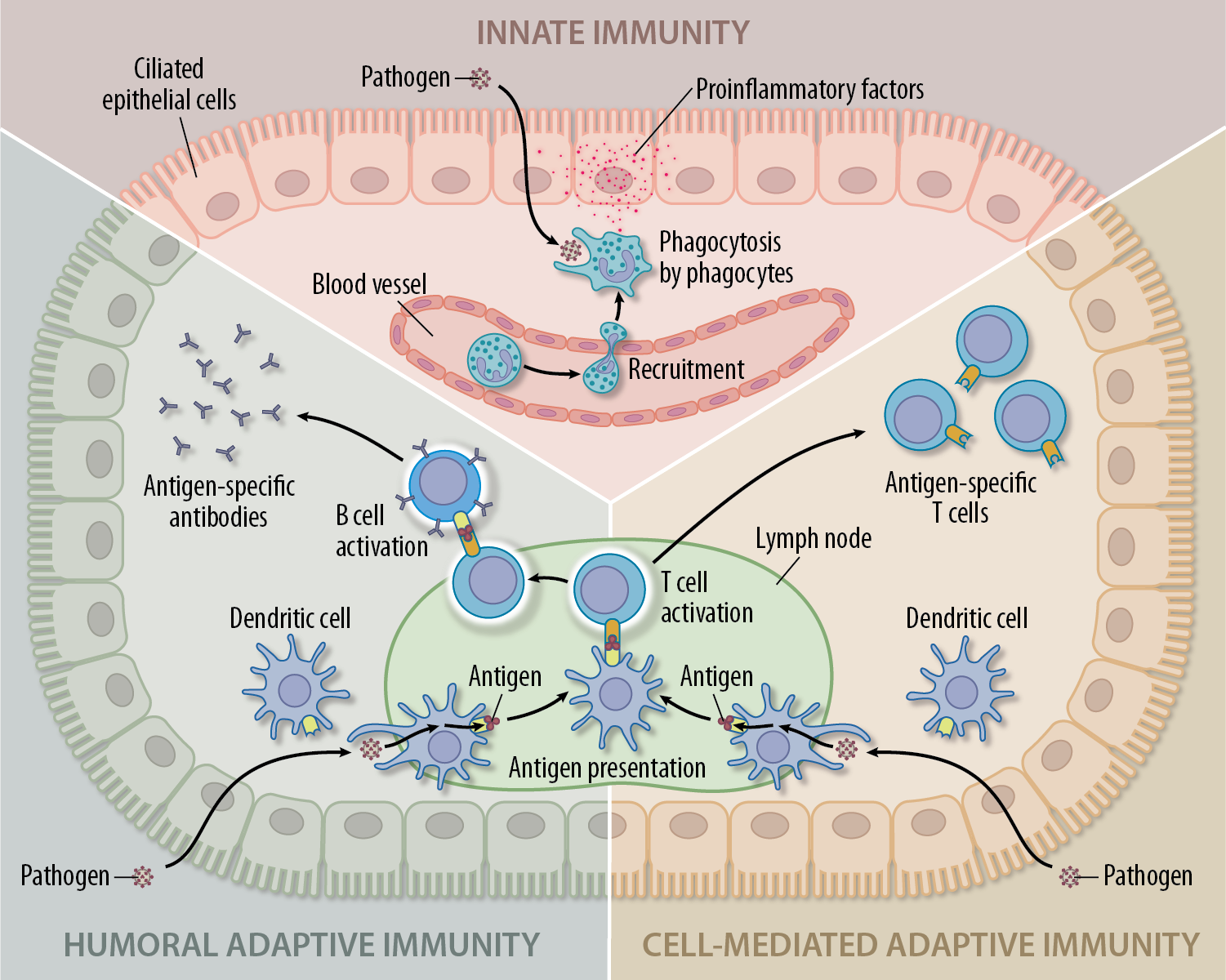
Chapter 2 / Fig. 2.4
Multiple responses of a normal immune system.

Chapter 8 / Fig. 8.4
Pathway from remnant clinical samples to a blinded variant panel. All panels were blinded to the tester. Data were unblinded and interpreted after testing was complete.
The editors and chapter authors are thankful for the visionary leadership of Drs. Francis Collins, Bruce Tromberg, Jill Heemskerk, Tiffani Lash, and Todd Merchak in guiding the development and implementation of the Rapid Acceleration of Diagnostics (RADx®) Tech program and facilitating the close collaboration of crucially essential government agencies and NGOs in this effort.
Additionally, we are grateful to the project task force responsible for overseeing the selection of book authors and content, including: Wade E. Bolton, Eric Evans, Tania Fernandez, D’lynne Plummer, Enrique M. Rabellino, and Alexandra Smith.

